
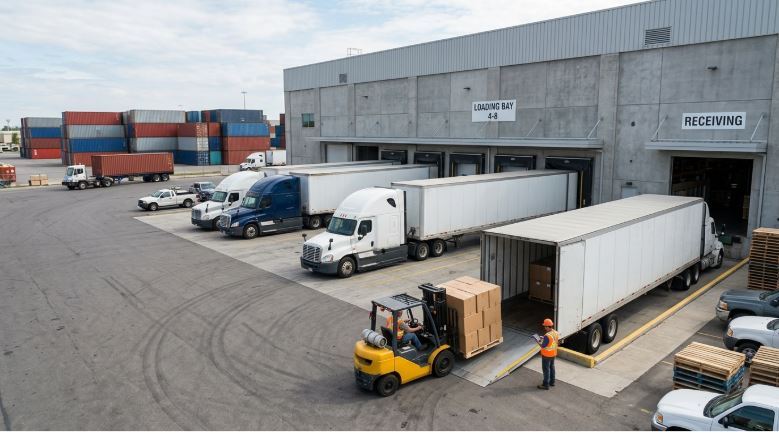
As a business expands its footprint, the physical movement of goods naturally becomes more complex. What once required a single warehouse and a trusted local courier quickly evolves into a sprawling web of regional distribution centres, independent transport fleets, and specialised freight forwarders. In the early stages of growth, adding new vendors seems like the most practical way to solve immediate capacity issues. However, without a unified system to tie these moving parts together, this multi-vendor approach rapidly leads to fragmented communication, high admin costs, and a total loss of supply chain visibility.
As retail and manufacturing operations scale, many logistics managers attempt to solve capacity issues by decentralising their warehousing and transport. While utilising a patchwork of regional 3pl logistics services provides immediate, localised storage options, it simultaneously introduces massive administrative overheads. Instead of managing a single streamlined channel, your staff spend their days logging into separate warehouse management systems, chasing individual tracking numbers, and trying to reconcile conflicting invoices.
Visibility
The most immediate casualty of managing multiple unlinked partners is the loss of real-time inventory control. When stock is scattered across different facilities, calculating accurate inventory levels becomes a time-consuming manual task involving spreadsheets and phone calls. This lag in data synchronisation makes it incredibly difficult to prevent stockouts of high-demand items, while simultaneously leading to expensive overstocking of slower-moving goods.
Furthermore, this data blindness impacts the final customer experience. If your customer service team cannot see which warehouse a specific order is shipping from, they cannot provide accurate delivery timelines or proactively manage transport delays. To protect your brand reputation, you need a single, consolidated data layer that aggregates information from every partner, transforming chaotic data silos into a clear, reliable stream of actionable intelligence.
Strategic Principle: True operational efficiency is impossible when inventory data is fragmented across separate, unlinked databases.
Sovereignty
Regaining control of a multi-partner network requires shifting away from the role of an active everyday dispatcher. If your internal team is constantly intervening to resolve disputes between transport providers and warehouse staff, your leadership is trapped in operational details rather than focusing on high-level growth. You need a structured management framework that clearly defines key performance indicators, ensuring every partner is held to identical standards of speed, accuracy, and safety.
This structural alignment is why many scaling organisations are transitioning toward integrated lead logistics models. By placing a neutral orchestration partner at the head of your distribution network, you gain the technology and expertise required to manage individual vendors objectively. This centralized oversight ensures that shipments are automatically routed through the most cost-effective and reliable carriers, allowing your business to enjoy the benefits of a diverse supply chain without the administrative chaos.
Strategic Principle: Retaining control over your supply chain requires a centralised intelligence layer that sits above your physical service providers.
Building a resilient, multi-partner logistics network is not about finding a single perfect supplier, but about establishing the infrastructure to manage diversity safely. By prioritizing real-time visibility and centralising your administrative control, you protect your margins and ensure your distribution network can scale smoothly alongside your commercial ambitions.